
Let’s Talk Polyester

Polyester is a sneaky MF. It’s hidden in everything you see, from the cute silicone cooking utensils, to the new camping tent you bought for your next trip, to the cute going-out top you found online. Nearly 70% of products in your household are polyester. But how did we let it get to this point, knowing what we do about the material? To be blunt, it’s all about corporate greed, convenience, and the act of turning a blind eye.
What Is Polyester?
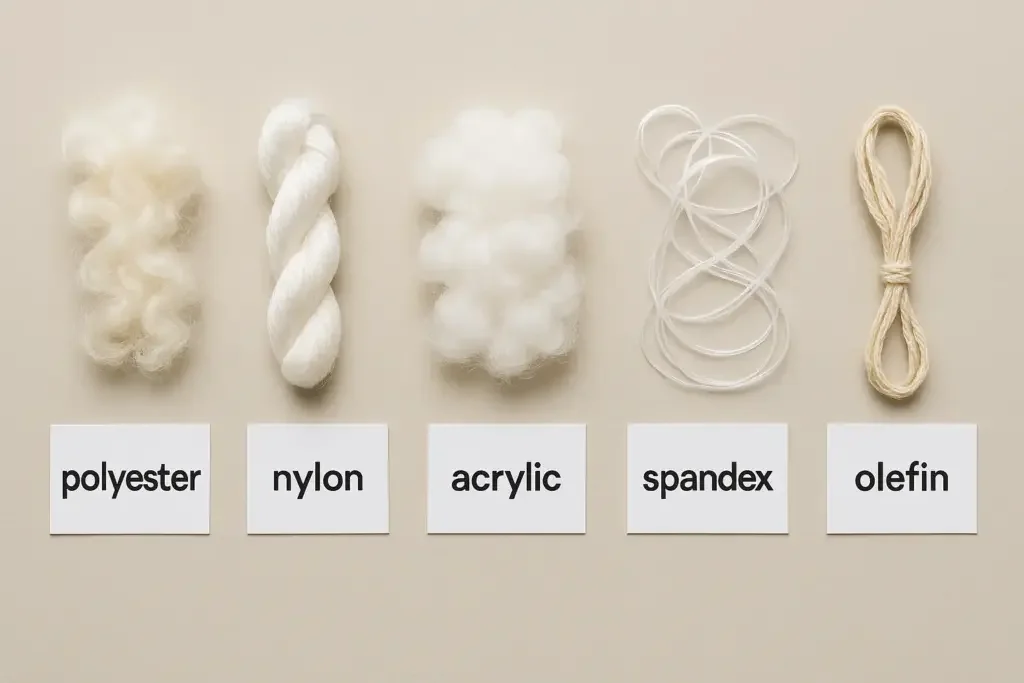
Polyester is a manmade material that is derived from petroleum. If that word sounds familiar, that’s because it is. Petroleum is also known as fossil fuels..aka GASOLINE. Manufacturers resort to polyester because its production cost is significantly lower than other natural materials. While it does reduce costs, it also reduces comfortability. Have you ever worn a cashmere sweater? Cashmere was the SHIT during the 90’s. Now think of the difference between the softest thing you’ve ever felt, and then think of a dry-fit shirt. Two completely different things, but, I digress. Polyester is a highly durable material, and is extremely resistant to environmental conditions, leaving it near impossible to degrade back into our ecosystems.
The History of Polyester
I will not bore you with the full history lesson, so I’ll just include the basics:
Polyester began its reign in 1926 under the name Terylene in the UK. It began to gain further attention during WWII when the soldiers needed stronger materials, which eventually led to a new consumer boom in synthetic materials. Initially, people were excited about the new material and its durability compared to natural fibers, but as the years went on, especially with new discoveries found in the 70s, we’ve begun to learn the harmful environmental impact, and now consumers are becoming wary.
How is Polyester Made?
This next part is going to be a lot of information, but I felt it necessary to understand the formation of polyester, just to show how extreme the whole process truly is. I’m going to simplify this as much as possible, but there are a lot of “science words,” so just be patient and if you need to look up pictures or videos, I highly recommend it because I did the same thing and it really helped put things into perspective.
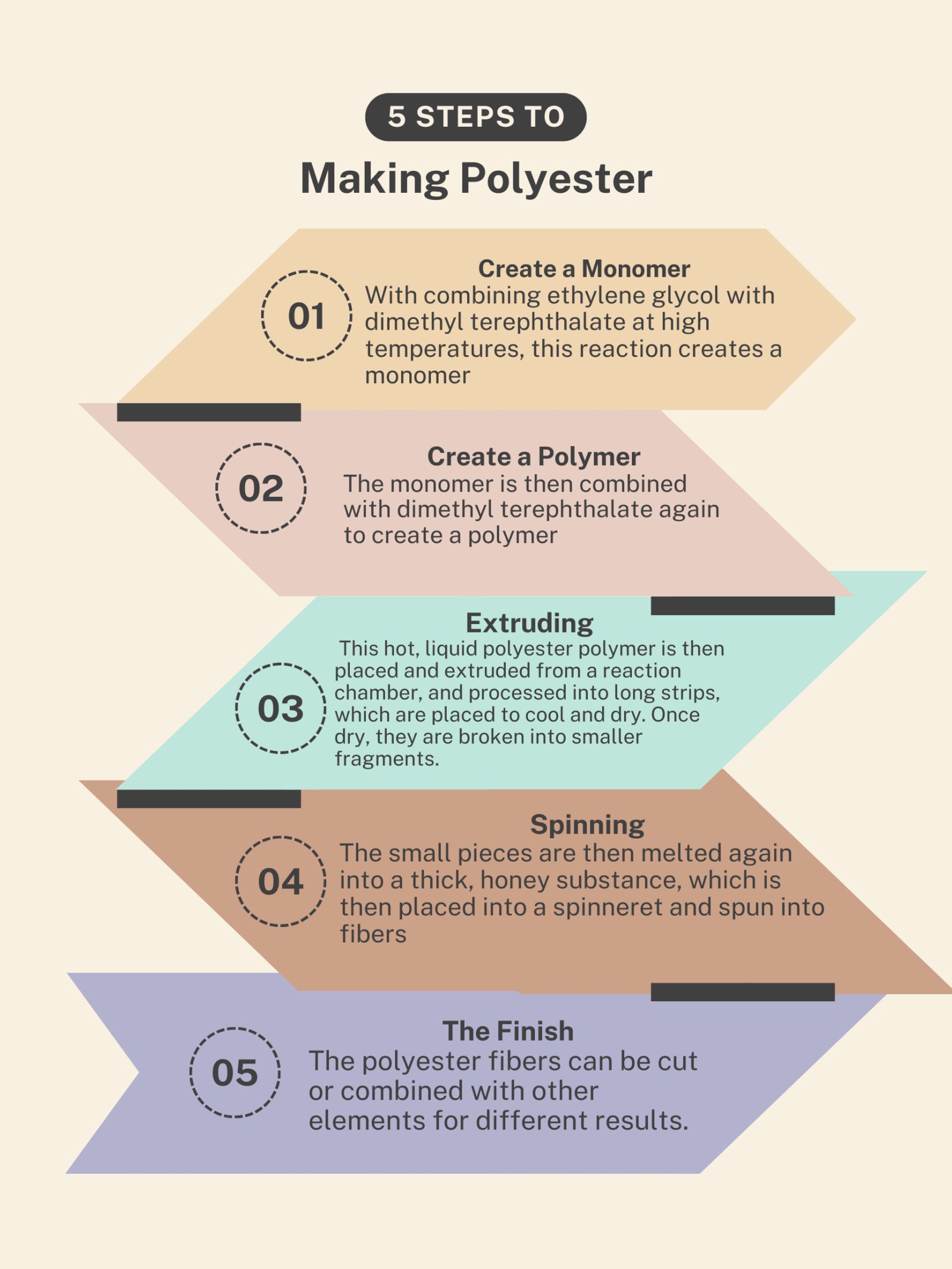
Lots of science behind it..when you could just go outside and shave a sheep and you’ve got a brand new sweater and blanket.
Anywho, now that we know how polyester is made, let’s talk about the different types of polyester.
Different Types of Polyester
Ethelyne Polyester
Ethylene Polyester (PET) is the most commonly used form of polyester fiber. The main ingredient in PET is petroleum-derived ethylene, where ethylene is the polymer that interacts with other chemicals to give the strong compound. In most cases, PET is used to replace cotton, but it’s also used in a multitude of consumer products, such as water bottles, food containers, high and fast fashion.
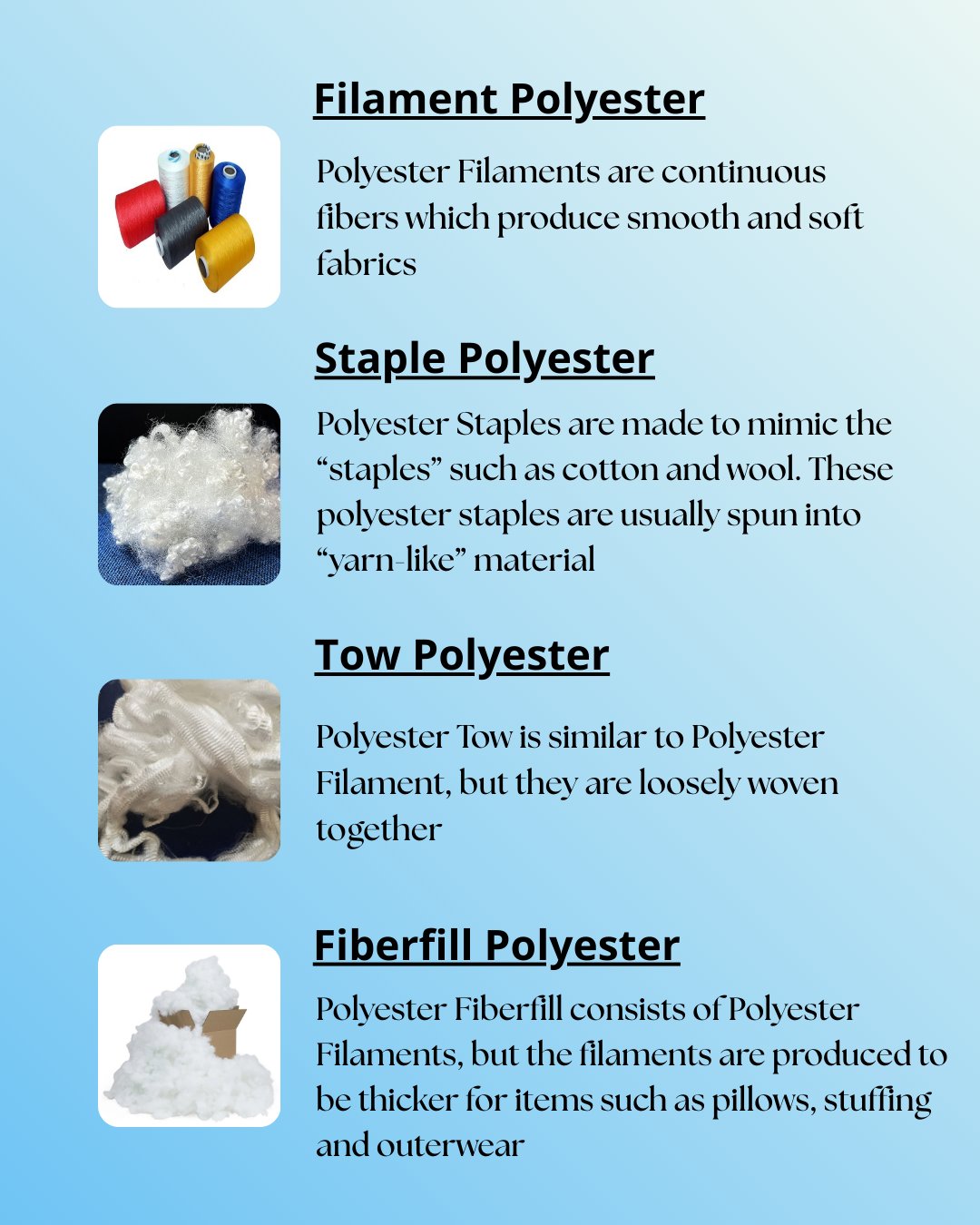
There are four ways to create PET fiber, and the polyester material various on which method is used:
PCDT Polyester
Similar to the PET creation process, PCDT has a different chemical make up. While they both consist of the reaction from ethylene glycol with dimethyl terephthalate, there is a different production process used to make these two common polyester variants. PCDT is more elastic and more durable than PET polyester, making it more preferred for heavy duty appliances.
Plant Based Polyester
The majority of plant based polyester is still reacted with ethylene glycol and dimethyl terephthalate. While the ethylene used in PET and PCDT polyester is petroleum, producers of plant-based polyester use ethylene sources like cane sugar instead. This variant is a better substitution compared to the other forms of polyester, and is overall more environmentally friendly, as it is biodegradable. However, it’s not used as much because the production costs more and can sometimes be less durable.
How Polyester Affects The Environment
Polyester is extremely harmful to the environment, not only as a finished product, but also during its production process. To make polyester, it’s necessary to source fossil fuels.The process of refining crude oil into petroleum releases various toxins into the atmosphere, which can harm living things both in the water and on land. Once petroleum is produced, further extraction is performed to create the ethylene required for polyester.
The manufacturing also includes a social and cultural impact, as the production usually includes slave labor, while the workers are exposed to toxic chemicals and fumes, causing neurological issues and cancer.
Studies have shown that washing polyester, whether by hand, or machine, releases microplastics and microfibers into our water systems. Microfiber pollution in our waterways harms the health of marine life, and it also contaminates drinking water in locations all over the world.
Eventually, consumers dispose of their polyester products, which do not biodegrade back to the Earth like wool and cotton do. It is unknown how long polyester actually remains in Earth’s ecosystems, studies have shown that it could take centuries for synthetic materials to truly break down into natural conditions. Researchers have estimated that up to 75% of pollution and microplastic contamination is due to polyester
Overall, the process and production of polyester is harmful to the planet right from the start, and there is no “end all” way to completely remove it. Boycotting the product all together is a great way to hinder the manufacturing, but doesn’t account for the millions of products already created and distributed.
How To Stop Polyester
There are so many ways that you can hold yourself responsible for polyester consumption. The easy answer is to just stop buying it, but in this world, that’s nearly impossible. Polyester is all around us, and I can guarantee that I can point out at least 10 items in your home that are made up of polyester. But I’m not shaming! My favorite seashell blanket is made from polyester. At this point, it’s about limiting what we buy, and replacing what we can, in the most sustainable way possible.
-
One way to watch out for synthetic materials is learning how to determine fabric. Look at the tags, touch and feel how each material feels and learn the differences in textures. Thrift stores can be a great way to practice this, but unfortunately, the amount of polyester products, especially clothing, is only rising in thrift stores. Be wary, and be responsible while shopping.
-
When shopping, especially in large department stores, check the labels, be the person standing in the middle of the alley reading every single tag and label. It’s not shameful, it’s responsible. Your body and environment will thank you in the long run.
-
Switching to natural materials is also another amazing way to reduce your polyester impact. This brings us back the rules of microplastics. Switch to wooden or bamboo utensils, swap out the bottled shampoo for bar shampoo, look for 100% tshirts. All these little steps that you’re taking add up to a greater impact in the future, especially when it’s time to part ways with an item.
-
Changing how you do laundry is also such an amazing switch, especially when it comes to our waterways. By switching to a liquid detergent, washing at a lower temperature, and leaving your garments out to dry compared to tumble drying, can save up to 5xs microfibre shedding. That’s right ladies, it’s time to go back to our roots and hang up the garments!
Phew, okay that was a lot..but we got through it! The topic of synthetic materials can be super overwhelming, but it’s important that we stay informed so we can understand how to navigate through this changing world. I’ve been relaying back to how people lived in the 1400-1800s and how they sourced their materials and how often they really “threw away” anything, which was rather rare. Everything had purpose and value. This has helped with holding myself accountable with what I’m consuming, and how I live my newfound sustainable lifestyle. It’s a process, so be patient with yourself, old habits die hard. You got this!
Interested in learning more? Linked below will be all websites I’ve used to gather my research:
https://sewport.com/fabrics-directory/polyester-fabric
https://ethixmerch.com/blog/polyester-fabric-properties-production/
Keep reading
Stay connected on new topics and upcoming events
New writing when it lands, plus beach cleanups and market dates.
Follow along on Instagram