Green Washing
What is Greenwashing?
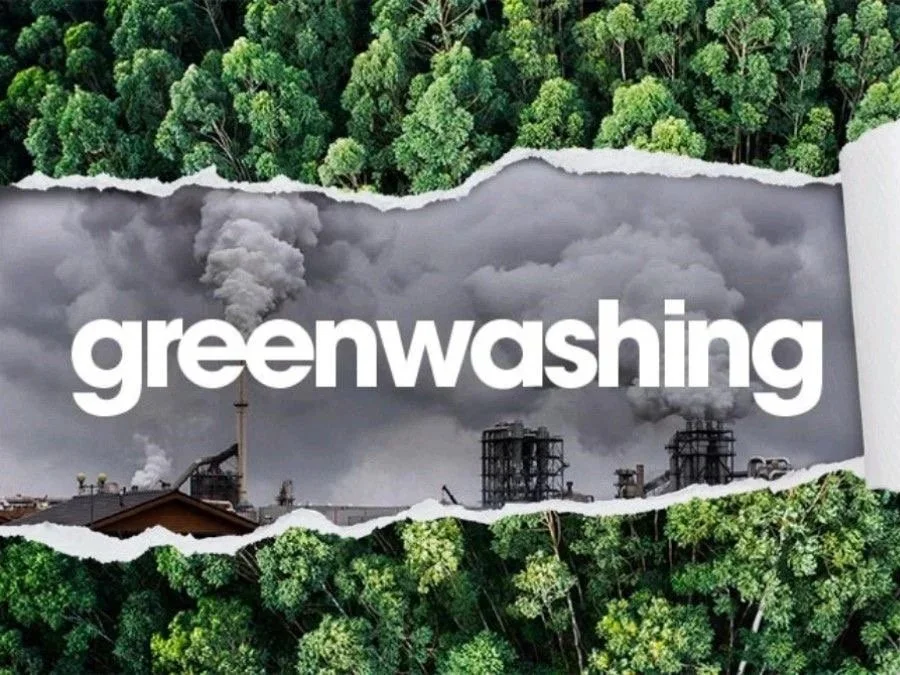
Greenwashing is when a company or brand makes false claims about producing and contributing beneficial environmental products and habits. It’s a marketing tactic to sell the same harmful product, while advertising to the consumers who are intentional with their environmental footprint. As sustainability and environmentalism becomes more popular, companies are scrambling to ensure that they still beat their monthly quotas, leading greenwashing to become more subtle and advanced.
Examples of Greenwashing
-
A forrest of trees, a group of critters, stream of flowing water- all these can show up on product packaging and advertisements as a way to imply sustainability within a brand.
Many water bottles are packaged with bright, forest green trees and scenic nature, insinuating clean, pollution-free water. Meanwhile, the companies who produce plastic water bottles are one of the main contributors to worldwide pollution, all while draining natural water resources.
Blue-Triton Brands, previously known as ‘Nestle Waters’, was hit with legal actions because they were falsely advertising their water bottles to be sustainable, despite its “significant and ongoing contributions to plastic pollution and its depletion of natural water resources.” In response, Blue-Triton Brands’ attorneys claimed the brand’s “representation of itself as ‘a guardian of sustainable resources’ and ‘a company who, at its core, cares about water,’ is ‘vague and hyperbolic’” and therefore, qualifies as “non-actionable puffery.” So, they basically are claiming that it’s the consumer’s fault for assuming the company is sustainable based off of their packaging…a.k.a., the definition of greenwashing.
-
When companies throw out buzzwords such as “natural,” “green” or “eco-friendly,” it doesn’t necessarily tell you much about the company’s specific production practices. These words are vague on purpose, forcing you to generate your own conclusion on their environmental influence.
It’s important to pay attention to products whose only form of production harms the environment, such as cutting down trees for material. A great example of this is toilet paper. Charmin, for one, uses the slogan: Protect, Grow and Restore. This slogan creates the assumption that there is an eco-conscious process behind the product. In reality, Charmin’s product process causes irreversible destruction to forests and natural habitats. Not only are these forests homes to thousands of species, but they also help control the advancement of climate change.
‘Chemical Recycling’ is another buzzword that is going around and stirring lots of confusion in the market. The phrase insinuates the idea of plastic being turned into new materials, when it actually means that plastic is being burned in order to produce fuel. Burning plastic results in a whole new form of greenhouse gases emitting into our atmosphere, leading to the advancing of climate change at a much faster rate. Chemical recycling has been proven to create more greenhouse gases than fossil fuel power plants.
The chemical industry is notorious for subbing one harmful substance out for another. So, when seeing ingredient labels, such as “BPA-free,” it should raise some flags. BPA (Bisphenol A) is an industrial chemical that is used to make certain plastics and resins.
-
Companies who rely on plastic use, also rely on consumer guilt as a marketing strategy for their products. By putting a huge recycling logo, or a sticker asking you to “recycle me please,” it immediately puts the consumer at ease, in effort to justify the purchase. People may even feel better about their purchase, assuming it’s the “greener” option, meanwhile, it puts no responsibility on the supplier to make the effort to reduce the production of single use plastics. According to the National Resources Defense Council (NRDC), the world only truly recycles “9 percent of the 440.9 million U.S. tons of plastic waste produced each year.” Doesn’t that just make your stomach churn.. Rather than leaving the decisions to the consumer, shouldn’t manufacturers take the responsibility of producing cleaner products and materials from the beginning?
-
Companies are constantly coming out with new ideas and plans and advertising them as something that is beneficial to the environment. Their goal is to get the public’s approval for their ideas, whilst hiding the harmful impacts the company is ultimately responsible for.
For example, in 2021, Ozinga Bros Inc. wanted to build an “underground storage facility” under Chicago’s southeast side neighborhoods. The company advertised their mining project to be a future home for multiple green businesses- such as solar panels and gardens. Ozinga Bros tried to check all the boxes they could in order to get the town on board with their project, whether it was growing their reputation of planting trees or hiring on an environmental activist for their team. However, when it came time for questions and physical proof of a positive environmental impact, they had no validity to their claims. Those promised projects failed to justify a mining scheme that would only bring hazardous impacts to the world around it.
-
Big companies love to release new promises for their products, but will do so without providing any actual data supporting those promises. The strategy of putting out “Net-Zero Emissions” is to remove the same amount of greenhouse gas emissions that we have released in a year. When companies begin to claim that they are picking up a Net-Zero project, it’s usually because they found a way to finesse the numbers so it looks like there is progress, while the company carries on business as usual. This strategy heavily relies on “carbon offsets,” which is basically when there is a hold-off on new business developments that would result in more carbon emissions, such as land development. It’s impossible to guarantee that this land will forever remain, and it’s also impossible for every company to purchase land for new offsets. With this in factor, it’s not a matter of conserving the undeveloped land, but changing and eliminating pollution practices.
Why Do Companies Greenwash?
“Going Green” is the new trend, and corporations thrive off of trends.
A study was done in 2021 where 85% of consumers worldwide claimed that they paid more attention to the environmental impacts of products, while a third claimed they were willing to spend more money on cleaner products. Gen Z is particularly more eco-conscious compared to other generations, claiming that climate-change is the biggest issue we are currently facing.
With these studies coming out, companies have to act fast, especially when trying to break previous years’ numbers. Since there is a lack of regulations, as well as consumer verification, it’s easy to maneuver and convince the public of false environmental practices. It’s all one big money scheme.
How Does Greenwashing Affect Consumers?
Over time, greenwashing numbs us to the real environmental impacts that are happening behind closed doors. First we trust a company, we find out the truth, and we lose that trust, and eventually we lose trust in all companies, including the ones who are truly holding their promises.
But it’s deeper than trust, it becomes a community issue as well when companies set up facilities in low income areas that can’t fight back. We allow these big businesses to thrive off of the working people who are just trying to make ends meet. Slowly, we begin to accept the manipulations, and then we lose track of who is actually working towards a cleaner environment, and who is just saying they are for monetary gain. Once trust is lost, not only do we begin turning on companies, but each other as well.
Over time, it becomes tiring to differentiate between what business is truly working towards a difference, and who is selling a lie, and eventually we give up and opt for convenience. This ultimately is what big brands are betting on, due to the planet being none of their concern, while their wallets remain top priority.
How Does Greenwashing Affect Our Environment?
When we allow businesses to take over, we risk all the hazards that they all bring, such as polluted air and deforestation, leading to health concerns for not only us, but the world around us.
For example, it’s a known fact that generic sunscreen is bad for our ecosystems, especially coral reefs. In 2025, Banana Boat and Hawaiian Tropic were both sued for advertising their sunscreen being “reef friendly” when in reality, they removed only a few chemicals in their recipe that were harmful, while leaving other harmful elements in their products. As consumers were putting their trust into these companies, they were hiding behind a lie while profiting off of the destruction of our planet for fiscal growth.
What Can We Do About Greenwashing?
Building awareness is the first step to combatting greenwashing. There are so many actions and alternatives that you can take to help, but the real issue lies within the government and their regulations.
The United States’ Federal Trade Commission is in charge of looking into business’ marketing strategies, to ensure there’s no false advertisement, but yet they have only settled fewer than 100 cases since the 90s, all of which were the most extreme scenarios.
In Europe, they released a “taxonomy system” which is a fully transparent list of companies ranked on their environmental impact and transparency.
But, I think we all know better than putting trust in our government to ensure the safety of us and the environment, so here’s some tips and tricks on how to combat greenwashing and alternative shopping options:
-
Big brands love to slap buzzwords on the front of their packaging, such as ‘clean’ and ‘natural,’ but by simply flipping the product over and reading the ingredients, you can actually see whether or not these companies are telling the truth.
A good rule of thumb is if you don’t recognize or pronounce the word, it probably isn’t ‘clean’ or ‘natural.’
-
Just because there’s a bunch of trees and plants on the label, doesn’t mean the product is actually eco-friendly. If anything, it should raise more red flags.
Be sharp, consider what they’re trying to sell you, and do your own research on the brand and their ethics. When in doubt, search for proof.
-
Look into different companies and their production process. There are plenty of smaller businesses that actually care about the environment and work hard to create products that are clean and safe for us and the planet.
Do your own research , visit local farmers markets, you’d be surprised at what you can find and even make on your own!
-
If something doesn’t feel right with picking a specific brand, it’s because it probably isn’t. Your body knows things before you can even comprehend what it is. If you don’t feel good about the purchase, search for a better alternative.
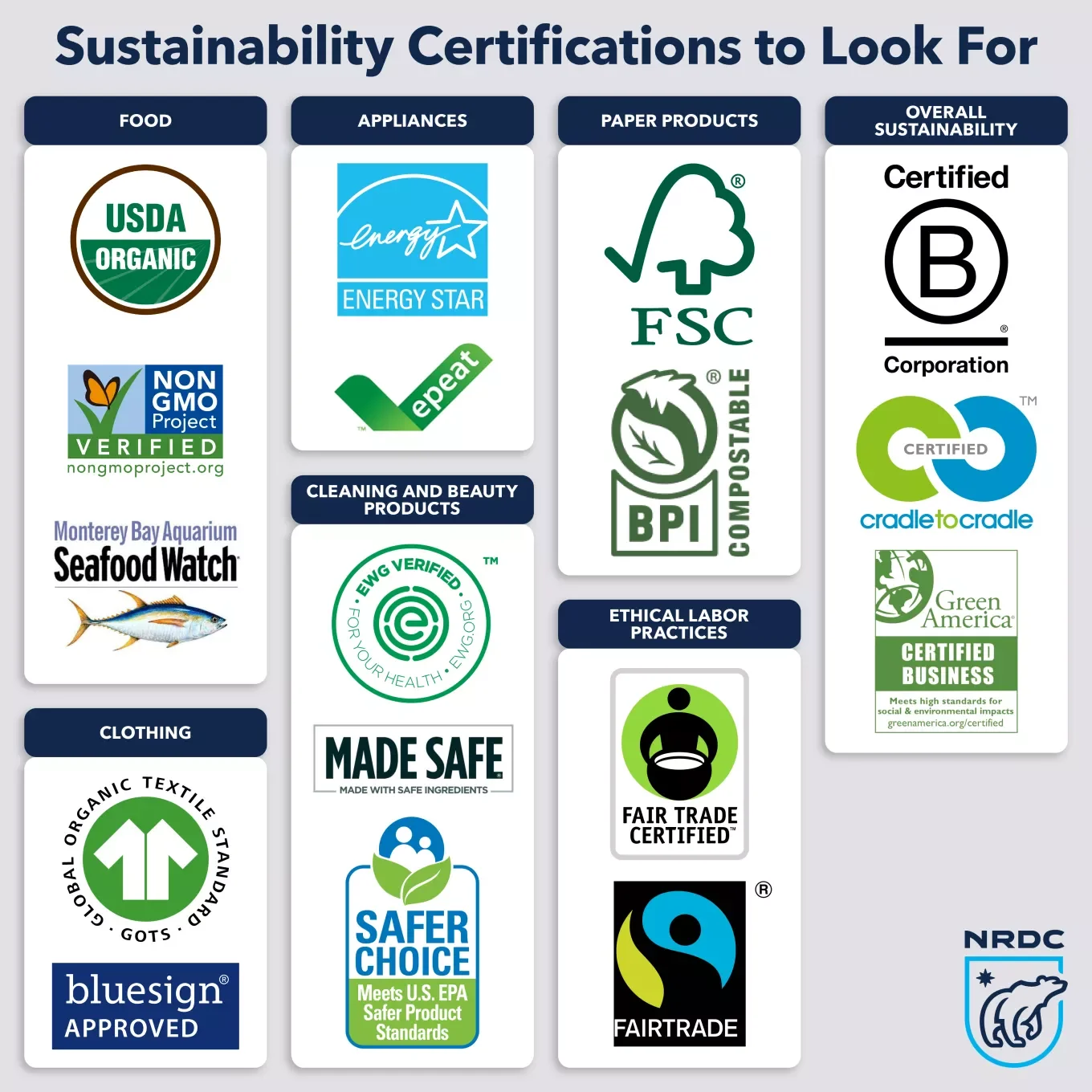
image from nrdc.org– learn to spot greenwashing
But Wait! How do I know all of this??
https://www.nrdc.org/stories/learn-spot-greenwashing
https://www.nrdc.org/stories/promise-and-pitfalls-net-zero-pledges
https://www.nrdc.org/stories/what-greenwashing
https://wheelerblog.london.edu/what-is-greenwashing-and-why-do-companies-engage-in-it/
https://www.arbor.eco/blog/the-greenwashers
https://www.eco-business.com/news/20-brands-called-out-for-greenwashing-in-2025/
https://www.nrdc.org/stories/learn-spot-greenwashing
https://plana.earth/glossary/greenwashing#a-guide-on-how-to-spot-greenwashing
Keep reading
Stay connected on new topics and upcoming events
New writing when it lands, plus beach cleanups and market dates.
Follow along on Instagram