Consumerism: The Ultimate Threat
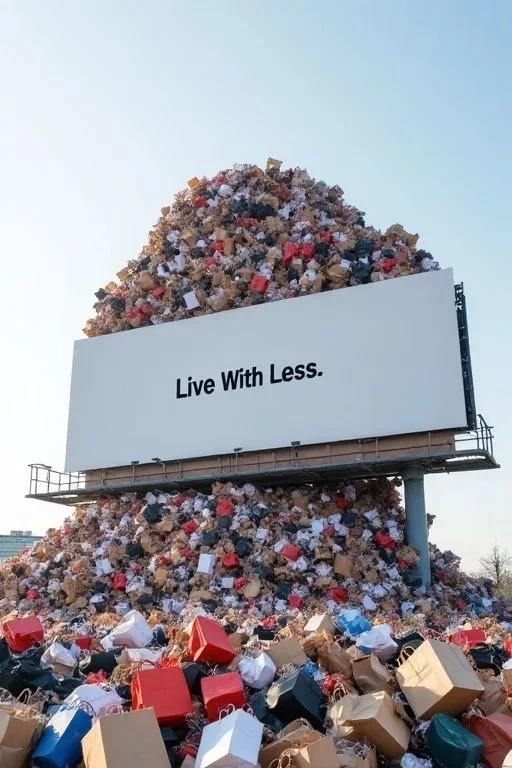
Everywhere we turn, we’re encouraged to buy more—new trends, seasonal sales, and “must-have” products flood our feeds daily. While recycling and reducing waste are crucial steps, they don’t address the bigger issue: the constant production of non-recyclable materials. So, who’s really to blame? The answer lies in societal pressures and the never-ending cycle of consumerism—where demand fuels waste, and waste fuels demand.
What is Consumerism?
Consumerism is the belief that increasing the consumption of goods and materials leads to happiness. We’re tricked into thinking we need certain products and brands to express our identity. The U.S. has embraced consumerism more than any other country—our economy thrives on it. But at what cost?
The Earthly Impact
In simple terms, consumerism is destroying our planet. We’re constantly encouraged to buy the latest trending items, and with peer pressure and FOMO (fear of missing out), it’s easy to fall into the trap.
Mass production emits enormous amounts of pollution during manufacturing and transportation. Once an item goes out of style, it’s either forgotten, discarded, or thrown into landfills—often ending up in our oceans. Both the production and disposal of goods contribute to greenhouse gas emissions, accelerating climate change. From the moment a product is created, the Earth is already paying the price for our excessive consumption.
Is There a Solution?
There’s no quick fix for this issue, but we can take steps in the right direction:
-
Limit Unnecessary Purchases
The first step I took toward reducing my consumption was to question my purchases. I used to buy things just because they were “fun” or “cute,” without considering if I truly needed them. Now, I pause and reflect on whether an item will serve a long-term purpose or just end up as waste. -
Quality Over Quantity
Fast and cheap might seem convenient, but it often comes at a high environmental cost. I’ve learned to prioritize higher-quality, sustainable products over disposable ones—even if it means spending a little more or waiting longer to buy. -
Thrift It!
Before heading to a department store, I check thrift shops or ask friends if they have extras of what I need. Most of my apartment is furnished with secondhand items, and not only does it add character, but it also feels good to know I’m living more sustainably. -
Consider the Impact
There are times when buying new is unavoidable, and that’s okay. The key is to be mindful of a product’s lifecycle. I look for items made from sustainable or recycled materials, compostable packaging, and ethical production practices. I also try to avoid products mass-produced in high-emission factories.
Final Thoughts
We’ve been conditioned to believe that buying more equals happiness, but the reality is that overconsumption is a major threat to our planet. By making mindful choices—buying less, choosing quality, and embracing sustainability—we can help break the cycle. Consumerism doesn’t have to control us. The power to change starts with our daily decisions.
Real Talk:
Making this post makes me feel very contradictory. I am literally a business owner talking about the horrors of consumerism..while trying to advertise to you my products. I take pride in how the majority of my products are curated from pre-loved items; it helps me feel less icky when it comes to marketing. While I am adding to the “buy buy buy” side of capitalism, I am not adding more harm to the Earth while I create. BusyBee is about creation and ethics.
Keep reading
Every Busy Beech piece is handmade from recycled and second-hand materials. Browse the shop.
Stay connected on new topics and upcoming events
New writing when it lands, plus beach cleanups and market dates.
Follow along on Instagram